
Hashtag Web Solutions
The Rise of Automation in the Workplace: Transforming Modern Business

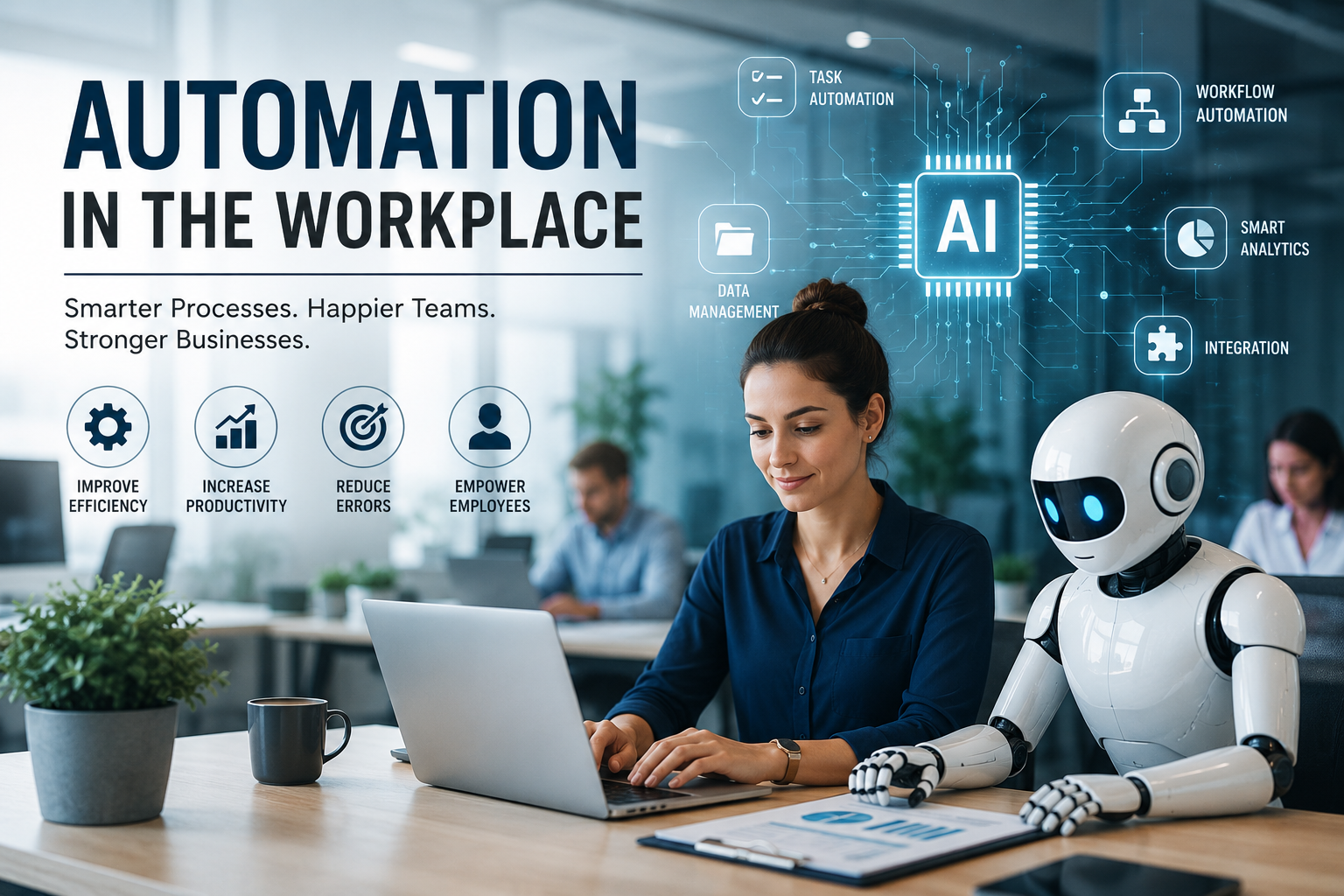
Automation in the workplace is rapidly changing how businesses operate, communicate, and manage everyday responsibilities. Companies are adopting artificial intelligence, robotic systems, cloud-based platforms, and automated software to complete repetitive tasks faster and with greater accuracy. These technologies are now used for data entry, appointment scheduling, inventory management, customer support, report generation, and many other routine activities.

One major advantage of automation in the workplace is improved productivity. When automated systems handle time-consuming tasks, employees can focus on creative thinking, problem-solving, strategic planning, and building stronger customer relationships. Automation can also reduce errors, improve consistency, and help organizations process large amounts of information more efficiently.

Many industries are already benefiting from workplace automation. Manufacturers use robotic machines to improve production, healthcare organizations automate patient records and appointments, and financial companies use software to process transactions and detect unusual activity. Retailers also rely on automation for inventory tracking, order processing, and personalized customer recommendations.

However, automation should be introduced responsibly. Businesses must provide proper employee training and explain how new systems will affect existing roles. Human supervision remains essential, especially when automated tools make decisions involving customers, employees, finances, or sensitive information. Companies must also protect data and regularly review automated processes for accuracy and fairness.

Automation does not always replace employees. In many cases, it supports workers by removing repetitive duties and making complex tasks easier to manage. Employees who develop digital and technical skills will be better prepared to work alongside advanced technology.

As automation continues to evolve, successful businesses will combine intelligent tools with human creativity, judgment, and communication. This balanced approach can improve efficiency, lower operational costs, create better customer experiences, and build a more productive and adaptable workplace.

How Automation Is Transforming the Modern Workplace

Automation in the workplace is changing how businesses manage everyday tasks, improve productivity, and support employees. Technologies such as artificial intelligence, robotic systems, cloud software, and automated workflows can handle repetitive activities including data entry, appointment scheduling, inventory tracking, report creation, and customer enquiries. By reducing manual work, automation allows employees to focus on creative thinking, problem-solving, strategic planning, and building stronger customer relationships. It can also improve accuracy, maintain consistent processes, and help businesses make faster decisions using real-time information. However, companies should introduce automation carefully by providing employee training, protecting sensitive data, and maintaining human supervision for important decisions. When used responsibly, workplace automation can simplify operations, lower costs, improve customer service, and create a smarter and more productive working environment.

How Automation Is Reshaping Workplace Productivity

Automation is changing the way businesses operate by streamlining repetitive tasks and improving overall efficiency. By using technologies such as artificial intelligence, robotic process automation, and smart software tools, companies can reduce manual workloads and allow employees to focus on more strategic and creative activities. This shift helps organizations increase productivity, minimize errors, and achieve better results in less time.

The Role of Automation in Enhancing Employee Experience

Automation is not just about replacing manual work; it is also about empowering employees with better tools and resources. By handling repetitive and time-consuming tasks, automation allows workers to spend more time on problem-solving, innovation, and collaboration. This leads to higher job satisfaction, improved work-life balance, and a more productive workplace environment.

Frequently asked question

Automation saves time, reduces errors, and allows employees to focus on creative work, problem-solving, planning, and customer service.

The main benefits include higher productivity, lower operating costs, fewer mistakes, faster processes, better consistency, and improved customer experiences.

Common challenges include employee training, data security, implementation costs, system errors, and concerns about changes to job roles.