


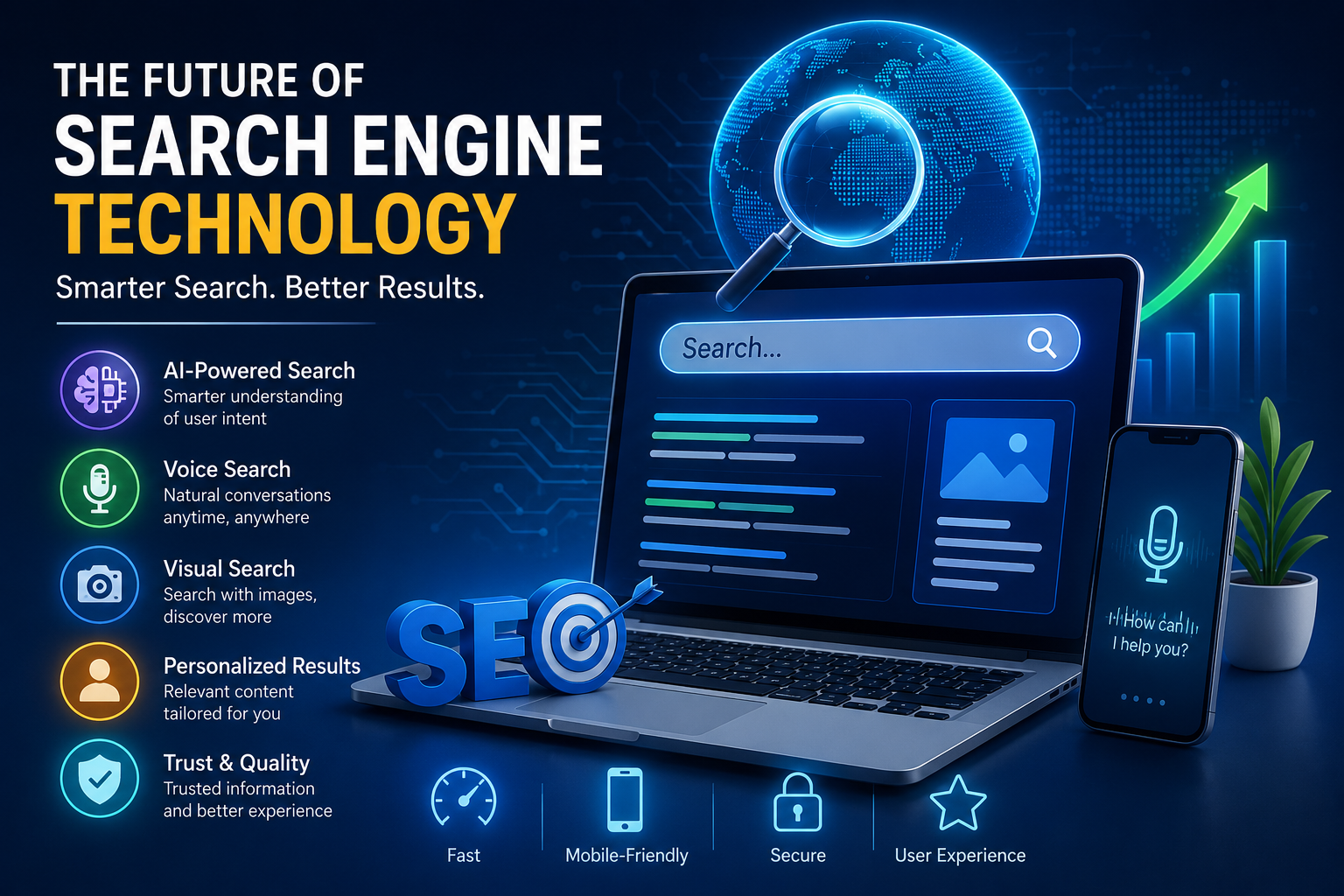
The future of search engine technology is moving toward faster, smarter, and more personalized digital experiences. Traditional keyword-based search is gradually evolving into intelligent discovery powered by artificial intelligence, natural language processing, voice recognition, and visual search. Instead of simply matching words, modern search engines are learning to understand user intent, context, location, and the meaning behind complex questions.
AI-powered search is expected to play a major role in how people find information online. Search platforms can now summarize topics, compare options, recommend useful resources, and answer conversational questions more directly. Voice search is also becoming increasingly important as users rely on smartphones, smart speakers, and connected devices. This means websites must create content that sounds natural, answers common questions clearly, and works well across different screen sizes.
Visual search will further transform online discovery. Users will be able to upload or capture images to identify products, places, objects, and services. For businesses, high-quality images, accurate descriptions, structured data, and fast-loading pages will become essential for visibility.
The future of search engine technology will also place greater importance on trust, expertise, and user experience. Websites that publish original, accurate, and helpful content will have a stronger chance of appearing in relevant results. Repeating keywords without providing value will become less effective.
Businesses should focus on creating useful content, improving mobile performance, strengthening website security, and understanding what their audience truly wants. As search technology continues to advance, successful brands will be those that adapt early and prioritize people over algorithms. Search engines may change, but the need for clear, reliable, and valuable information will remain constant. Emerging tools may also make search more predictive, multilingual, and accessible. Companies that monitor changing search habits and update older content regularly can maintain visibility while building stronger relationships with potential customers online globally.
How AI Is Transforming Search Engine Technology
Artificial intelligence is changing the way search engines understand and deliver information. Instead of relying only on exact keywords, modern search platforms can analyze user intent, context, location, and conversational language. This allows them to provide faster, more accurate, and highly relevant results. AI-powered search can also summarize complex topics, recommend useful resources, and answer detailed questions directly. For website owners, this means content should be natural, informative, trustworthy, and focused on solving real user problems rather than repeating keywords.
AI-Powered Search: Creating More Personalized User Experiences
Artificial intelligence is becoming a major force behind the future of search technology. AI-driven search engines can analyze user behavior, preferences, and previous interactions to provide highly personalized results. This advancement enables users to find information faster, receive smarter recommendations, and interact with search platforms in a more natural and conversational way.
Voice, Visual, and Conversational Search: The Next Generation of Search
The future of search is moving beyond traditional text input with the growth of voice assistants, image recognition, and conversational AI. Users will increasingly search through spoken questions, images, and interactive conversations. These technologies make information access more convenient and allow search engines to provide answers that feel more like human communication.