


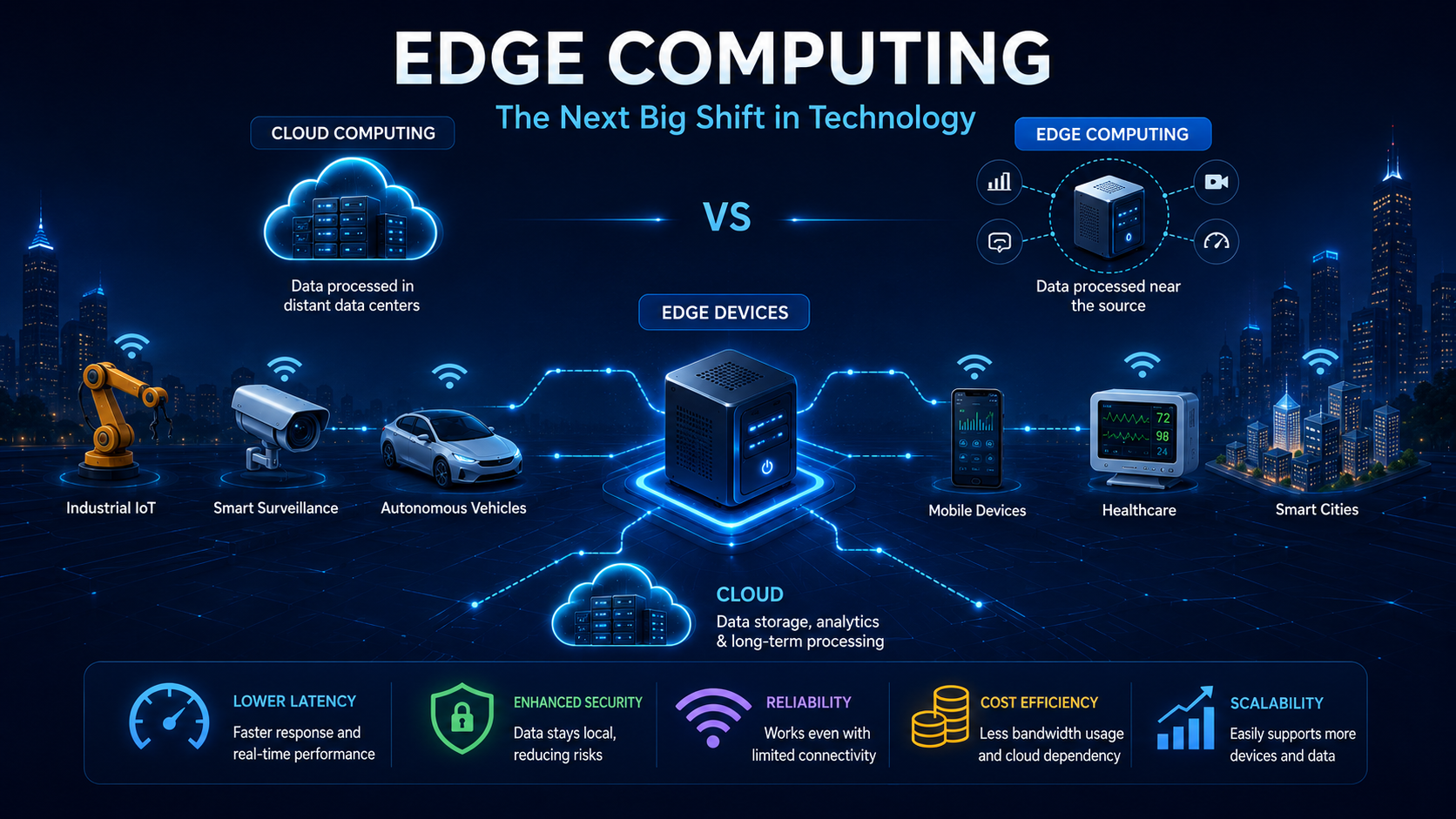
Edge computing technology is becoming one of the most important developments in the digital world. Instead of sending all information to distant cloud servers, edge computing processes data closer to where it is created. This may happen on smartphones, smart sensors, factory equipment, vehicles, local servers, or other connected devices.
One of the biggest benefits of edge computing technology is faster response time. When data is processed nearby, applications do not need to wait for information to travel to a central data centre and return. This lower delay is especially useful for autonomous vehicles, healthcare systems, industrial machines, gaming platforms, and smart-city services that depend on real-time decisions.
Edge computing can also improve reliability. Devices may continue performing important tasks even when internet connectivity is slow or temporarily unavailable. Businesses can reduce their dependence on constant cloud access while maintaining smoother operations.
Another advantage is stronger data privacy. Sensitive information can be analysed locally instead of being transferred across multiple networks. This may help organizations reduce security risks and manage customer or business data more carefully. However, every connected edge device must still be properly protected, updated, and monitored.
Edge computing does not replace cloud computing. The two technologies work together. Edge systems handle immediate processing, while cloud platforms provide long-term storage, advanced analysis, and centralized management. This combination allows companies to build faster and more flexible digital services.
As smart devices and connected systems continue to grow, edge computing technology will become increasingly valuable. Businesses that adopt it responsibly can improve performance, reduce delays, support automation, and create better customer experiences. The next major shift in technology will not only happen in the cloud—it will also happen closer to users, devices, and real-world operations.
How Edge Computing Improves Real-Time Data Processing
Edge computing processes data closer to connected devices, delivering faster responses, lower latency, and more reliable performance. Working alongside cloud computing, it supports real-time applications such as smart cities, healthcare systems, industrial automation, and autonomous vehicles.
Faster Responses with Lower Latency
Edge computing processes information near its source, reducing delays and enabling quicker responses for applications that depend on real-time decisions.
Improved Data Privacy
Sensitive information can be analyzed closer to where it is created, reducing unnecessary data transfers and giving businesses greater control over their information.