
Hashtag Web Solutions
How No-Code Platforms Simplify App Development for Modern Businesses

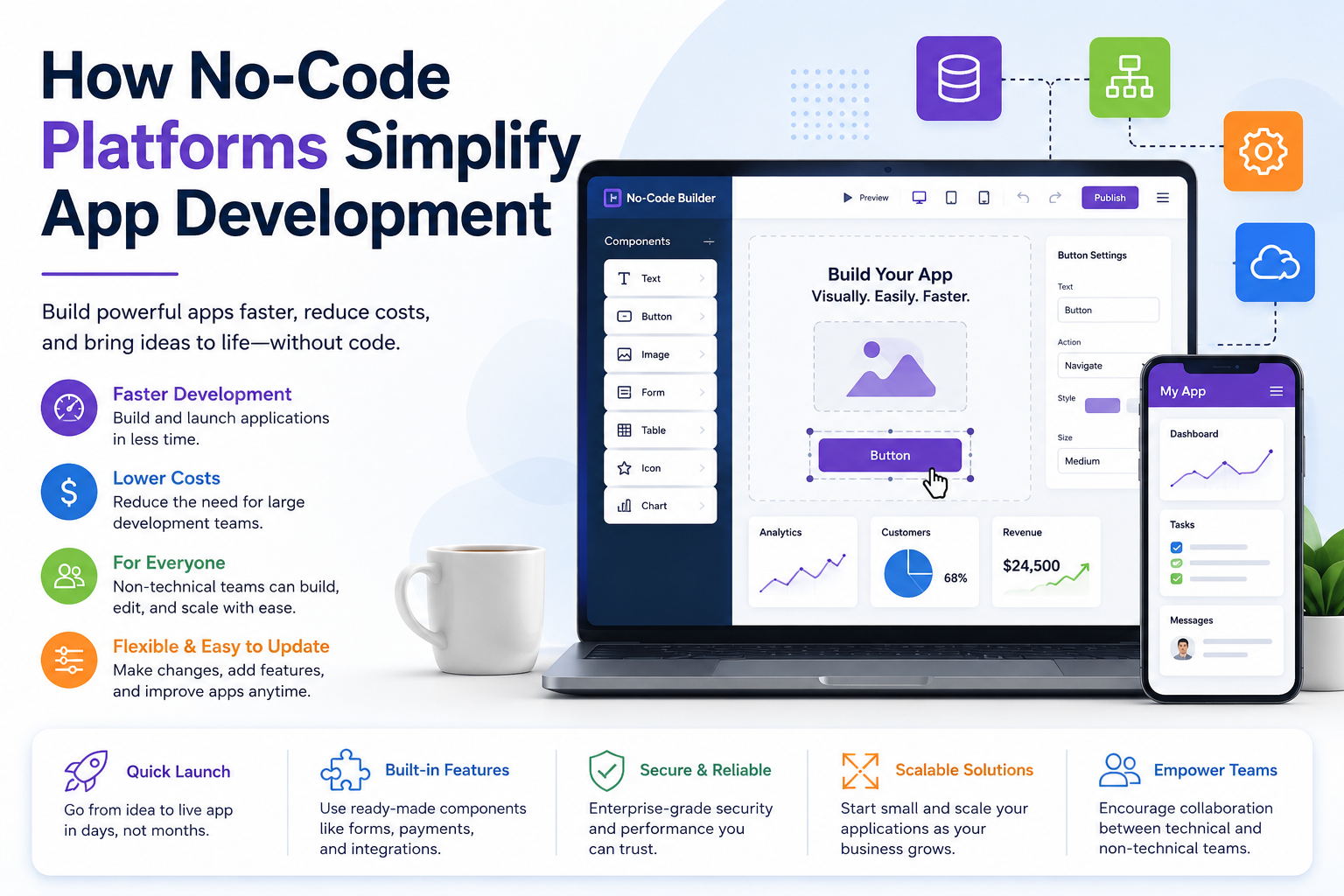
No-code platforms for app development are transforming how businesses create digital products. Instead of writing complex programming code, users can build mobile apps, websites, dashboards, customer portals, and automated workflows through visual editors, drag-and-drop tools, templates, and ready-made components. This makes app development more accessible to entrepreneurs, marketers, designers, small businesses, and teams without advanced technical skills.

One major benefit of no-code platforms is faster development. Traditional app creation may involve lengthy planning, coding, testing, and revision stages. With no-code tools, businesses can quickly create prototypes, test ideas, collect user feedback, and improve their applications before making a large investment. This faster process helps companies launch products sooner and respond more effectively to changing customer needs.

No-code platforms can also reduce development costs. Businesses may not need a large team of developers for simple applications or internal tools. Many platforms provide built-in features for forms, databases, payments, notifications, user accounts, and integrations. These tools are useful for creating booking systems, inventory trackers, e-commerce solutions, project dashboards, and customer management applications.

Another advantage is flexibility. Team members can update layouts, edit content, add features, and adjust workflows without waiting for a developer to make every change. This gives businesses greater control over their digital solutions and encourages collaboration between technical and non-technical employees.

However, no-code platforms may have limitations related to advanced customization, performance, security, scalability, and third-party integrations. Businesses should carefully evaluate their requirements and select a platform that supports future growth.

As no-code technology continues to improve, app development will become simpler and more inclusive. By combining visual development tools with clear goals, strong design, and proper testing, businesses can create useful applications, improve productivity, reduce costs, and bring innovative ideas to market faster.

Why No-Code Platforms Make App Development Easier

No-code platforms simplify app development by allowing users to build digital products through visual editors, drag-and-drop tools, templates, and ready-made components. Instead of writing complex programming code, businesses can create mobile apps, websites, dashboards, booking systems, customer portals, and automated workflows more quickly. These platforms are especially useful for entrepreneurs, small businesses, marketers, and non-technical teams that want to test ideas without hiring a large development team. No-code tools can reduce costs, speed up launches, and make updates easier because users can change layouts, content, and workflows on their own. However, businesses should still consider security, scalability, performance, and integration needs before choosing a platform.

Enabling Rapid Innovation and Digital Transformation

In today’s competitive business environment, companies need to adapt quickly to changing customer demands and market trends. No-code platforms support rapid innovation by allowing businesses to create, modify, and deploy applications without complex coding processes. From automating workflows to building customer-facing apps, these platforms help organizations embrace digital transformation and stay ahead of competitors.

Making App Development Accessible to Non-Technical Teams

One of the biggest advantages of no-code platforms is that they allow non-developers, often called citizen developers, to participate in application creation. Business professionals can build customized tools based on their own requirements without relying entirely on IT departments. This accessibility encourages creativity, improves productivity, and helps companies solve problems more effectively.

Frequently asked question

They provide drag-and-drop editors, templates, databases, forms, and ready-made components, making it easier and faster to build digital products.

They can reduce costs by lowering the need for large development teams and shortening the time required to create and test an application.